
Web3 Summit 2026 was a slight departure from our usual setup as we start shaping a very different event for 2027.
A few weeks after the Summit, the dust has settled, and life has mostly returned to normal, but the strongest impression remains: this year's event made Web3 feel unusually concrete. Part of that came from Funkhaus itself. Part came from the people we brought into it. Most of it came from having so much happening that you could use, challenge, build on, listen to, or just stumble across.
For two days, developers, researchers, artists, DJs, musicians, designers, founders, journalists, and community members moved between talks, workshops, live demonstrations, installations, and music. The program centered on a deliberately broad question: who should control our digital future? It approached that question from far more angles than code alone.
Familiar Web3 subjects ran throughout: decentralization, privacy, identity, infrastructure, and governance. At this stage of history, none of those topics feel particularly niche. Decisions about AI, platforms, data collection, online speech, and digital identity are increasingly becoming questions about who has agency online and who does not.
But let's be real, Web3 has always had an abstraction problem.
A lot of the most important work happens where most people never see it. Protocol changes arrive through repositories. Governance develops through referenda and forum threads. Infrastructure improvements can take months or years before anyone outside the teams involved experiences the difference.
Web3 Summit brings some of that work out into the open.
You can see what people have been building. You can ask why it works the way it does. You can sit down with a tool rather than reading about it. You can watch someone encounter an interface for the first time and quickly discover whether the people who built it made the right assumptions, and this year there was plenty to put through that test.
Playground.dot probably captured the spirit of the event better than anything else.
The prototype was built as a live collaborative development environment. Developers could take existing applications, modify them, remix somebody else's work, and deploy prototypes to a temporary event network with minimal setup. Guided quests, sample applications, and AI-assisted tooling helped people get moving quickly.
You could walk over, open a laptop, and build.
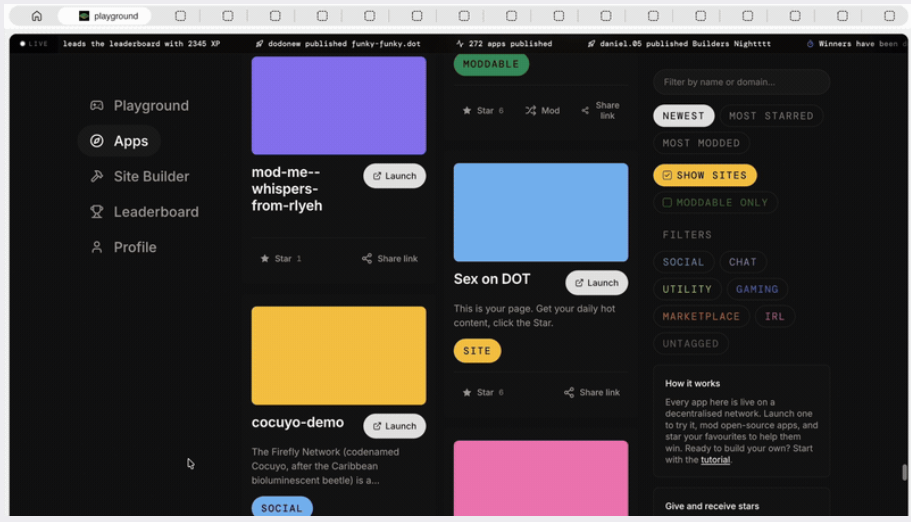
No one expected everyone to leave with a polished application or a startup pitch. The setup encouraged people to experiment, borrow ideas from each other, and see what happened as applications changed hands throughout the event. The €5,000 prize pool rewarded participation and creativity rather than pretending that two days of experimentation had to produce the next giant Web3 business.
That approach also exposed the underlying Polkadot infrastructure in a useful way.
A developer can quickly tell where an onboarding flow stops making sense. Somebody unfamiliar with the stack will find assumptions that an experienced engineer stopped noticing years ago. A tool that looks straightforward in documentation can become much less straightforward once fifty different people begin using it differently.
This is one reason physical events continue to earn their place in a distributed industry. You can always ship software remotely, but getting a couple of hundred people into a building and watching how they behave around it gives you a different kind of information entirely.
The technical program went well beyond Playground.dot: Polkadot architect Gavin Wood used the first day to look toward Polkadot 2030, while separate sessions went under the hood of the Polkadot Platform and explored building products with the product SDK.
Some conversations were about where the underlying architecture is heading over the next several years. Others were much closer to the developer sitting down today and trying to make something work. And we would admit that Web3 needs both.
There will always be deep protocol engineering in an ecosystem like Polkadot, and some of it will remain difficult to explain outside relatively specialist audiences. The more interesting shift is happening one layer higher, where the focus increasingly moves towards what people can build with that infrastructure and how much of its complexity they actually need to see.
Karim Jedda's Friday talk carried the wonderfully direct title “People Don't Use Technology. They Use Products.” That sentence packs a lot.
A technically sophisticated network can still be miserable to build on. A decentralized application can still lose people during onboarding. Users can support the principles behind a system and have no interest whatsoever in learning the internal architecture before they use it. The practical sessions across the Summit suggested that those questions are getting more attention.
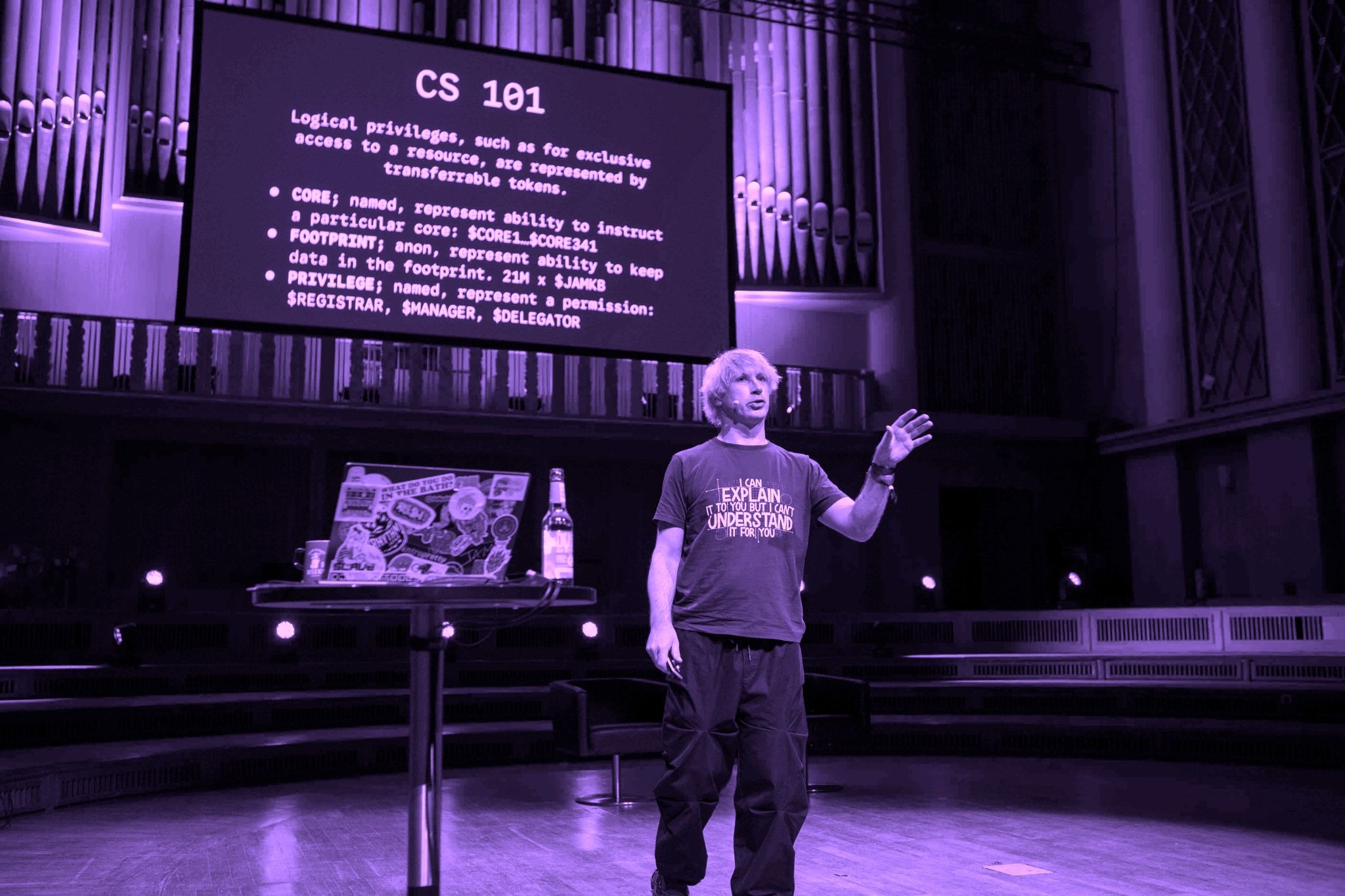
The other half of the program is what made Web3 Summit feel different from a straightforward developer conference. Max Schrems asked why privacy keeps losing in practice despite winning so many of the arguments around it. Nick Srnicek spoke about the future of AI. Yanis Varoufakis took the main stage, while sessions elsewhere explored money and power in a multipolar internet, anonymity, platform control, censorship, and the future of independent journalism.
One workshop brought journalists and Web3 builders together around censorship-resistant publishing and digital sovereignty. Another conversation looked directly at whether independent journalism can survive an internet where large platforms increasingly control distribution and visibility.
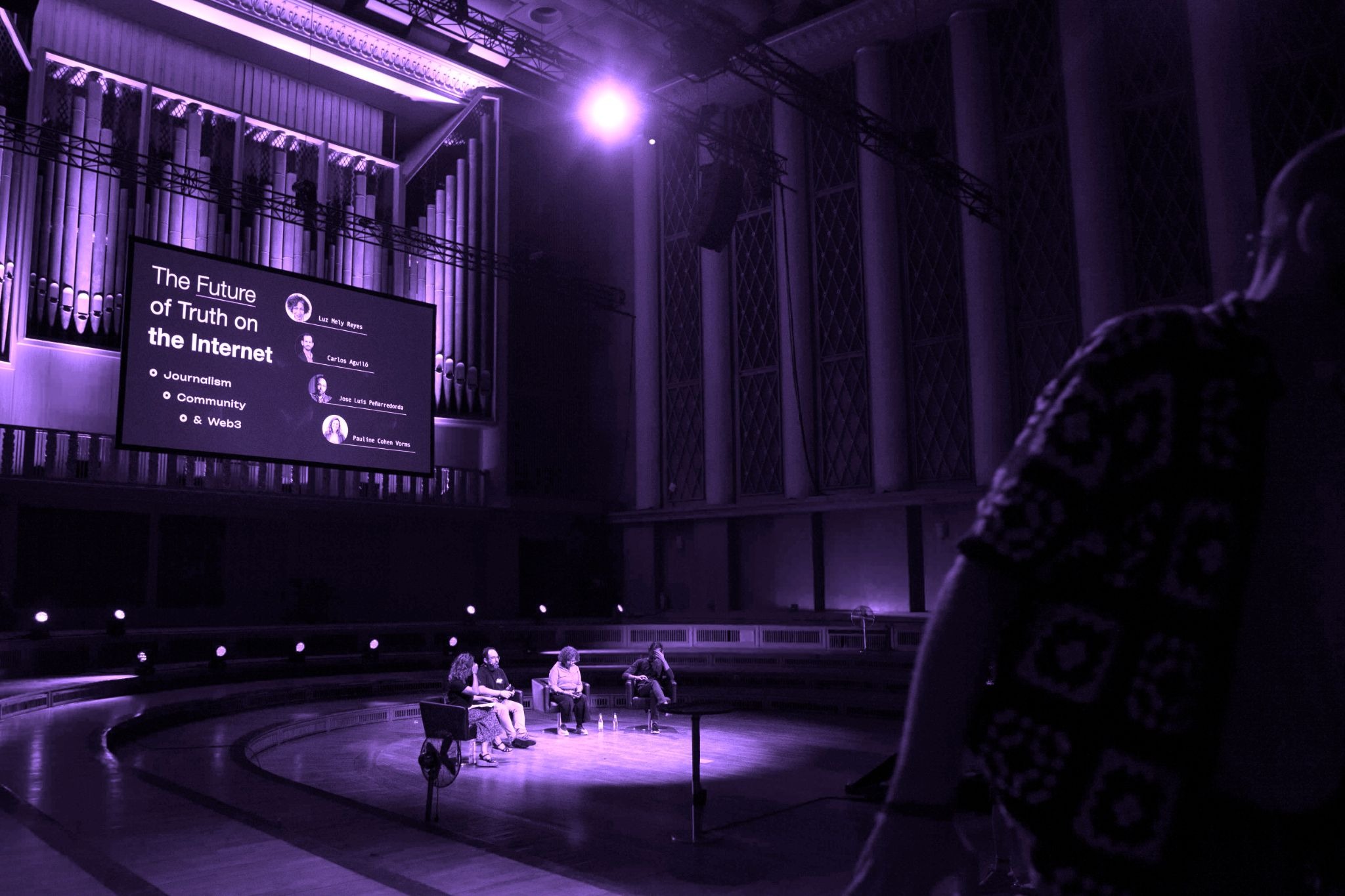
These subjects belong at a Web3 event because the technology has always grown out of arguments about how the internet should work.
Who stores our information?
Who gets to identify us?
Who decides what we can publish or access?
What happens when one company becomes the gatekeeper for a huge part of online life?
How much of ourselves should we need to expose just to prove that we are human?
Those discussions become much more interesting when engineers working on possible alternatives are sitting a few rooms away. On Friday, for example, a session on a community-rooted approach to proof of personhood ran alongside discussions about journalism, privacy and decentralized social media. The overlap between them is fairly obvious once they share a program.
Identity design affects privacy. Platform architecture affects speech. Governance decisions affect the people who depend on those systems. When it's all happening in one building, it becomes harder to pretend these are isolated technical problems.
The cultural program completely changed the atmosphere, and that was more intentional this year than ever.
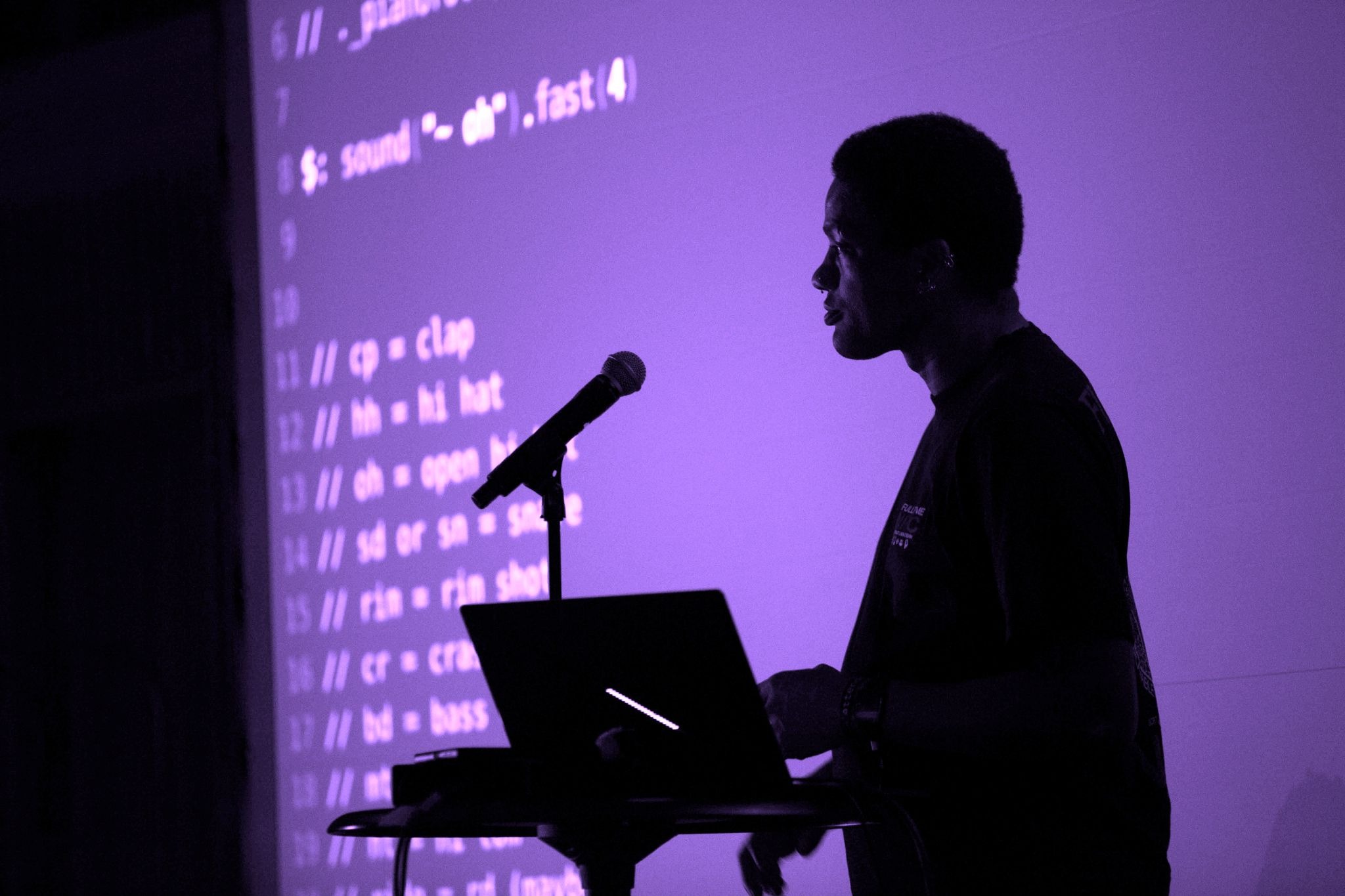
Antonio Roberts ran a live-coding music workshop and later performed using the same approach. Hoshiko Yamane and Makoto Sakamoto brought an electronic ambient performance into Studio 4. So Kanno installed an interactive robotic sound system. Elsewhere there were collaborative paintings, a life-sized wooden sculpture workshop, interactive installations and live ceramic work.
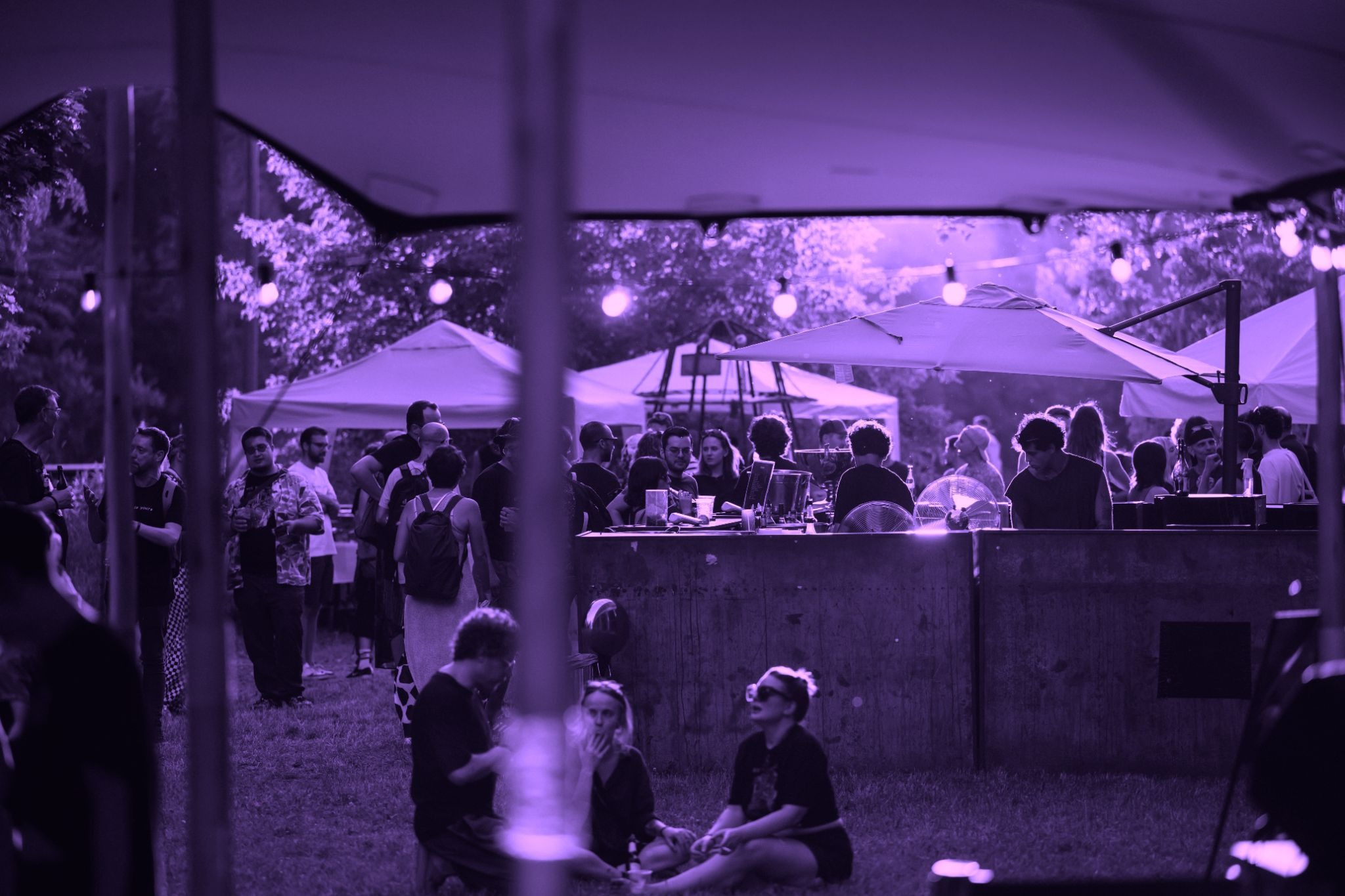
Outside, Astral Industries took over the chill space for both days, with ambient music, places to sit and enough separation from the main stages to disappear for a while. Then, late on Thursday evening, Mobile Kino put The Matrix on an outdoor screen at Funkhaus.
A little on the nose, perhaps. But also quite good.
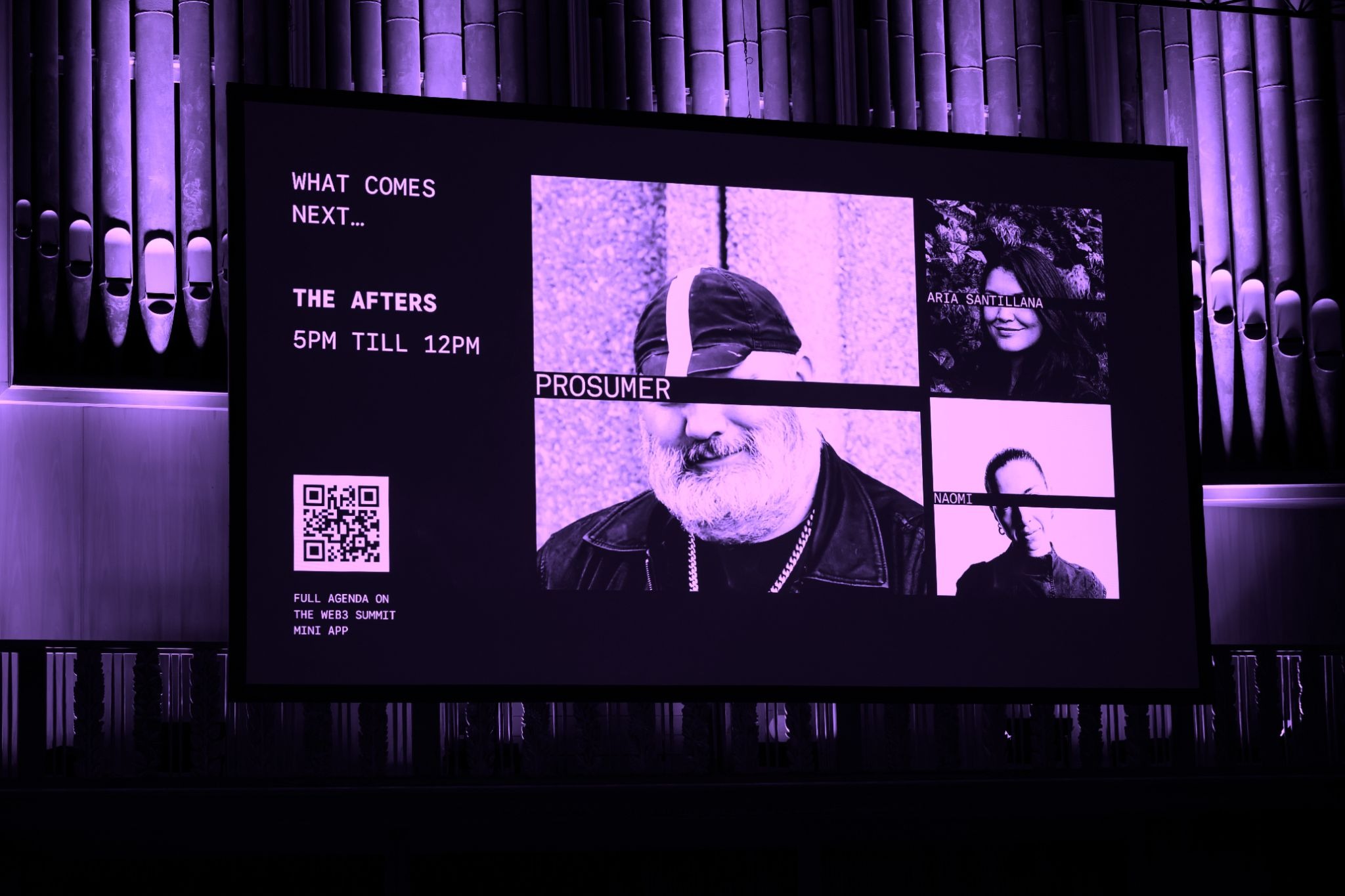
Friday eventually gave way to an afterparty with Aria Santillana, Naomi and Prosumer, moving the event from talks and workshops into several hours of Berlin house, disco and club music, and weirdly, none of this felt separate from the Summit's subject.
As Aria spun vinyl records, up stepped Prosumer to take over with a more digital approach. Music, culture, design, art- it's all been affected by technology in one way or another. Technology creates culture. Culture decides how technology gets understood and used. The relationship runs in both directions, and Web3 has sometimes been guilty of discussing the future of the internet as if engineers will design it entirely on their own.
They won't. And would probably, if they pause for a admit that they can’t.
Artists find unintended uses for tools. Musicians experiment with ownership and distribution. Journalists collide with questions of censorship and provenance. Designers determine whether technically impressive systems are comprehensible to everybody else.
Bringing those people into the same event changes the conversations around the technology, and obviously it also makes the whole thing more enjoyable.
Another advantage of workshops, prototypes, and live experimentation throughout the venue is that not everything has to look finished. Some technology events leave very little room for uncertainty. Products arrive on stage polished. Demos follow a predetermined path. The language around them tends to get more confident as launch day approaches.
Web3 Summit still had plenty to work out.
Playground.dot was explicitly a prototype. Attendees could book open spaces for pop-up presentations. Developers were encouraged to remix other people's applications. Collaborative artworks changed as people added to them over the two days.
It gave the event some useful rough edges, and people could encounter work earlier, ask questions, and disagree with it. For anyone actually building technology, that is often where the useful feedback lives.
It is easy to forget how strange Web3 can look from the outside.
The community spends an enormous amount of its life in GitHub repositories, governance systems, Telegram groups, Matrix rooms, forums, and video calls. People can collaborate for years without meeting. Then an event like this takes a large section of that online network and puts it in one building.
Avatars become real people. Repositories have somebody standing beside them who can explain why a particular decision was made. A forum argument can continue over coffee and, occasionally, become much easier to resolve. A developer can show another developer a problem rather than spending half an afternoon writing it out.
Someone attending a session on privacy can walk straight into a conversation with a person building the infrastructure being discussed. And the spaces between the program start producing their own program. That is probably the most difficult part of physical Web3 events to recreate anywhere else.
The Web3 Summit site described the event as a working environment for the next internet, bringing together builders, thinkers and creators around questions of digital agency, privacy and participation. Looking back at the two days at Funkhaus, the broadness of that definition was one of the things that worked particularly well.
Web3 felt much less abstract when you could hear it, see it being built, argue about it with the person building it, and then wander outside while someone carved a sculpture or played an ambient set. We, Gavin, Polkadot, want much more of that.
Web3 Summit 2026 gave us a glimpse of where the event can go next, and for 2027, Web3 Summit is getting a major facelift. The technical depth stays, but more is under the hood and hidden away. Powering payments, registration, ticketing, agendas, music, lighting… ok, but the event around it will become broader, more creative, and much closer to a festival.
We want to give more space to the culture developing around Web3, including the conversations that never make it onto a formal stage and the artists, musicians, and creators interpreting many of the same questions from completely different directions.
There will be more to see, more to take part in, and a much bigger program of music and entertainment. Because if Web3 is genuinely about creating a different kind of digital world, its future can't be something we only discuss in technical terms.
Next year, we're going to make the world around it much louder.


© 2026 Web3 Foundation. All rights reserved.
.png)